
The short answer
Prep the decisions before you prep the food.
Mark the nights that need dinner, choose two or three recipes that can cover them, scale portions for both people and leftovers, make one grocery list, then cook only as far ahead as your week benefits from. Leave a flexible night so one changed plan does not break everything.
Meal prep is not a contest to fill the fridge. The goal is fewer dinner decisions on the days when time and attention are already gone.
A realistic weekly method
Five steps that leave room for real life.
Cross out the nights that do not need cooking.
Start with the calendar, not a recipe feed. Mark dinner out, late work, regular takeaway, existing freezer food, and nights when leftovers will already be available. What remains is the real planning job.
Why it works
Removing false demand prevents overbuying and gives each planned recipe a clear purpose.
Group adjacent nights that can share a meal.
Monday and Tuesday may share one batch. Thursday and Friday may share another. A meal group makes leftovers deliberate rather than accidental and reduces the number of separate cooking sessions.
Why it works
Two well-chosen batches can cover four dinners while still leaving space for a fresh or off-plan meal.
Choose recipes for the week you have.
Use the busiest night to set the difficulty ceiling. Choose food that reheats or holds well when it must cover another evening. Avoid selecting several recipes that all need last-minute attention at the same time.
Why it works
Practical fit matters more than collecting the most exciting ideas. A recipe is useful when it survives the schedule.
Scale portions and build one shopping list.
Count everyone eating plus the portions intended for later. Combine compatible ingredients across the selected recipes, organize them by grocery category, and check the kitchen before shopping.
Why it works
The plan, portions, and grocery list describe the same week, so you are less likely to buy food for meals that never happen.
Choose how much cooking to do ahead.
Cook complete meals when reheating suits them. For other recipes, prepare a sauce, chop sturdy vegetables, portion ingredients, or simply make sure the recipe and groceries are ready. Follow each recipe’s own storage and reheating guidance.
Why it works
You remove the most stressful work without forcing every dinner into the same preparation method.
Example week
Five dinners can mean two cooking sessions.
| Night | Plan | What the prep solves |
|---|---|---|
| Monday | Cook a flexible curry or chilli batch. | Fresh dinner plus planned portions for Tuesday. |
| Tuesday | Reheat Monday’s meal. | No second recipe or extra grocery list. |
| Wednesday | Off-plan dinner or existing freezer meal. | The schedule admits that cooking is not needed. |
| Thursday | Cook a rice bowl, tray bake, or taco filling. | One practical batch covers Thursday and Friday. |
| Friday | Use Thursday’s second portion. | The busiest night already has a decision. |
| Weekend | Keep one flexible recipe or decide later. | The plan can absorb changing social plans. |
This is only a pattern. A larger household may need more portions; a solo cook may freeze part of a batch. The useful idea is that nights are grouped around actual cooking sessions rather than treated as seven unrelated recipe slots.
What usually goes wrong
Four ways meal prep becomes more work.
Planning every dinner
A full calendar looks organized but ignores nights that are already covered or likely to change.
Choosing too many recipes
More variety creates more ingredients, more cooking transitions, and more half-used groceries.
Ignoring portion math
A four-serving recipe cannot cover two family dinners unless the quantities are deliberately scaled.
Prepping everything the same way
Some meals reheat well; others are better with components ready and final cooking left for the day.
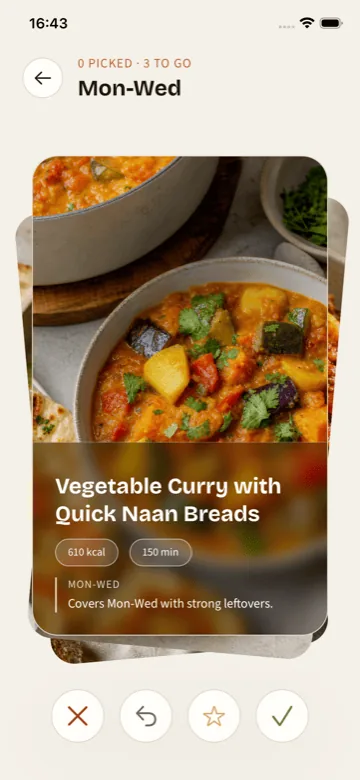
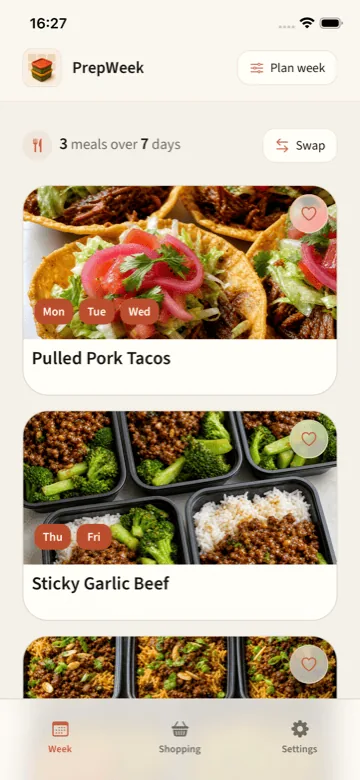
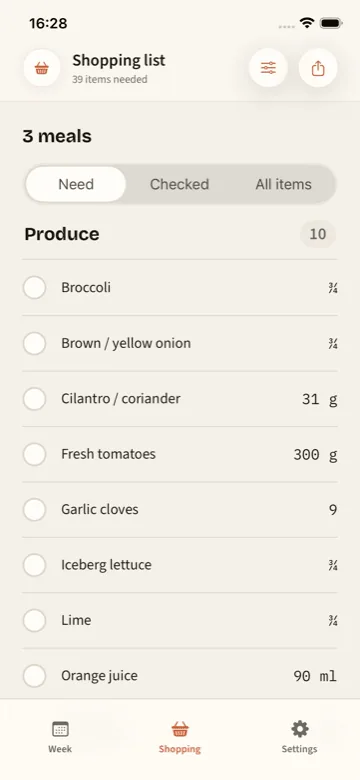
See the workflow
From an undecided week to one shopping list.
These are real PrepWeek screens. Choose the nights, pick meals that fit, then shop from the list built around the plan.
Swipe to see all three screens →
First plan free. No account required.
Try PrepWeek on iPhoneCommon questions
Useful answers before you start.
Do I need to prep seven dinners?
No. Plan only the dinners that genuinely need coverage. Leave restaurant plans, takeout, leftovers, and flexible nights off the cooking schedule.
How many recipes should I meal prep for a week?
For many households, two or three practical dinner recipes are easier to finish and use than seven unrelated meals. The right number depends on portions and how many nights each batch covers.
Should every meal be fully cooked in advance?
No. You can cook complete meals, prepare components, or simply decide the recipes and shop once. Choose the level of preparation that removes work from your busiest days.
What if the week changes after I plan it?
Keep at least one flexible meal, leftover night, or off-plan evening. A useful weekly plan should absorb change instead of treating it as failure.
Keep planning